Comparison table task
The Tempest
Staging
Our stage for The Tempest was set up in the 'thrust' style which is when the audience is set up on 3 sides like so.
Our stage for The Tempest was set up in the 'thrust' style which is when the audience is set up on 3 sides like so.
AudienceOur audience just consisted of our classmates who were also in the performance so there wasn't a large capacity.
Production valuesProps:there weren't many props used, we used chairs on stage, a gun and a bottle of some sort of alcohol. Costumes: My costume was made up of a grey blazer, a grey hat, a bandana, white t-shirt and blue jeans.
Sound: In the opening sequence we used a peice of music by skrillex to add the effect and all changed dynamically when the line "oh my god" was screamed in the music. This peice of music was used again in a section with Medea speaking to the people on the floor.
Lighting: To show that there is a storm, we used blue flashing lights to symbolize lightning and also purple flashing lights for the section with Meda speaking to the people on the floor.
Political significanceConflict in scenes between different characters. Caliban seen as a black man and used as a slave.
Cultural significanceOur production of The Tempest was certainly not typical of original and other Shakespearean plays because we modernized it by adding modern music to make more affect to the scenes. Our costumes as well weren't typical for a Shakespearean play because in the Elizabethan times their clothing was very different to what we wear now. However, we could have bought/hired Elizabethan costumes had we wanted to make our play more typical of the original play of The Tempest.
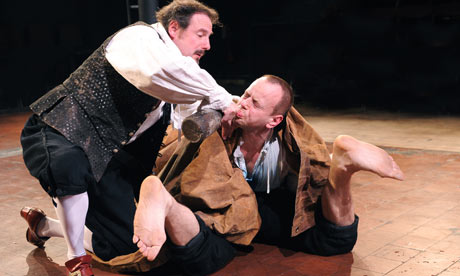
This is a picture from a performance of The Tempest in it's original form.
Social significance
Production valuesProps:there weren't many props used, we used chairs on stage, a gun and a bottle of some sort of alcohol. Costumes: My costume was made up of a grey blazer, a grey hat, a bandana, white t-shirt and blue jeans.
Sound: In the opening sequence we used a peice of music by skrillex to add the effect and all changed dynamically when the line "oh my god" was screamed in the music. This peice of music was used again in a section with Medea speaking to the people on the floor.
Lighting: To show that there is a storm, we used blue flashing lights to symbolize lightning and also purple flashing lights for the section with Meda speaking to the people on the floor.
Political significanceConflict in scenes between different characters. Caliban seen as a black man and used as a slave.
Cultural significanceOur production of The Tempest was certainly not typical of original and other Shakespearean plays because we modernized it by adding modern music to make more affect to the scenes. Our costumes as well weren't typical for a Shakespearean play because in the Elizabethan times their clothing was very different to what we wear now. However, we could have bought/hired Elizabethan costumes had we wanted to make our play more typical of the original play of The Tempest.
This is a picture from a performance of The Tempest in it's original form.
Social significance
Modern Shakespeare
Staging
Audience
Production values
Political significance
Cultural significance
Social significance
Production values
Political significance
Cultural significance
Social significance
Medea 5th Century BC, Greece
Staging- Ampitheatre seating 5000 with a round orchestra.
Audience
Production values
Political significance
Cultural significance
Social significance
Production values
Political significance
Cultural significance
Social significance
Modern Greek Theatre(Our Medea)
Staging- Studio theatre with 130 seats in triangle shape.
Audience
Production values
Political significance
Cultural significance
Social significance
Production values
Political significance
Cultural significance
Social significance
