Medea
In Medea I played Jason, the leading male role. Jason is Medeas husband who betrays her by leaving her and their two sons to be with the Royal Princess. The betrayal from Jason causes Medea to go insane, the audience would seem, she cunjours up a plan to get back at Jason for what he done. Although deep down she still loves Jason, she wants to get him where it hurts most... his heart. Medea, in her crazy state, plans to kill the Princess by poisoning a dress and crown she had her children deliver to the Royal Palace. The Princess died once she put the dress on, along came her father Creon The King and sadly the poison leached to his body and killed him too. She then had been driven by new levels of insanity and planned to kill her own children in order to get full revenge on Jason. She kills them both and that's the whole story simplified.
I was happy to play Jason because I've never had the opportunity to play off a character who is driven by anger and full of mixed emotions between the love of his children and hatred for his ex-wife. I felt confident with doing something new and I feel I had to open up some new skills which I hadn't been very familiar with to make my character realistic by using my own emotions to portray Jason's character. By using my own emotions I was able to put myself into Jason's position and genuinely felt a bit sorry for myself and aim my anger at Medea. I think I was cast as Jason to give me a challenge and I was happy to accept the challenge and play it off the way I felt it would work.
I found it challenging having long monologues for dialogue and at times I didn't think I'd remember my lines but I managed to remember my lines no matter how many lines I was given.
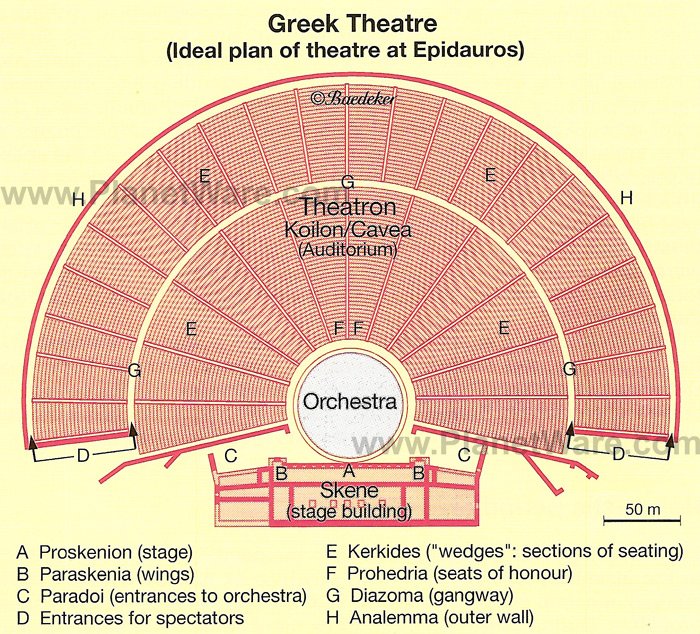
My strongest scene was in my first appearance as Jason with Medea as we were arguing. Polly and I began closer together on the proskeniun and the stronger the arguement became the further away from each other and I think us doing that gave a more angry mood and we did this for that reason.
The opening sequence with the Nurse's monologue we used as a chorus peice with us all working in unison and each movement represented the words that were being said. The line "anywhere else you were a foreigner" says a lot about Greek history, in ancient Greek times anyone who didn't speak the native tongue was called a barbarian which is a foreigner and that's what Medea was seen as.
I chose to use my normal voice to characterize Jason as it didn't seem necessary to put on any accent whereas others in Medea had decided to use a posh/well spoken accent which I thought was preferrable in an Elizabethn play such as those written by Shakespeare. I myself think I already have a well spoken voice and chose to keep it the same, I think doing this kept a realistic portrayal of my character and the play.
I chose to wear a grey blazer and trousers to connote the bad time Jason is going through with his ex-wife going crazy and still lingering in his life. Then to add injury to insult she kills his fiance, his future father in law and his two children. His life couldn't get much worse and so the grey shows off his bad times which are often referred to as 'grey times'. And usually you'd have a man with his shirt done up to the top button but as my charcter was under a lot of stress it was sensible to have by shirt undone.
I found it challenging having long monologues for dialogue and at times I didn't think I'd remember my lines but I managed to remember my lines no matter how many lines I was given.
My strongest scene was in my first appearance as Jason with Medea as we were arguing. Polly and I began closer together on the proskeniun and the stronger the arguement became the further away from each other and I think us doing that gave a more angry mood and we did this for that reason.
The opening sequence with the Nurse's monologue we used as a chorus peice with us all working in unison and each movement represented the words that were being said. The line "anywhere else you were a foreigner" says a lot about Greek history, in ancient Greek times anyone who didn't speak the native tongue was called a barbarian which is a foreigner and that's what Medea was seen as.
I chose to use my normal voice to characterize Jason as it didn't seem necessary to put on any accent whereas others in Medea had decided to use a posh/well spoken accent which I thought was preferrable in an Elizabethn play such as those written by Shakespeare. I myself think I already have a well spoken voice and chose to keep it the same, I think doing this kept a realistic portrayal of my character and the play.
I chose to wear a grey blazer and trousers to connote the bad time Jason is going through with his ex-wife going crazy and still lingering in his life. Then to add injury to insult she kills his fiance, his future father in law and his two children. His life couldn't get much worse and so the grey shows off his bad times which are often referred to as 'grey times'. And usually you'd have a man with his shirt done up to the top button but as my charcter was under a lot of stress it was sensible to have by shirt undone.
A challenge for me was portraying a man who mistreated his wife and ran off with another because I myself have never had that experience so it was all about me really stepping into the shoes of a man who has little morals. But then I also had to make sure I wasn't too far expressed in a way that Jason hates Medea because that wasn't the case he'd just fallen for another woman in order to gain publicity for his name. So I challenged myself with this role, and I also had to step into the shoes of a man who loses his wife, father in law and two children all in a short space of time, and that my ex wife killed them all. So that was quite a challenge because again I've never had that experience in my life but I felt that by using my own skills I managed to portray Jason in a way that was clear to the audience.